

Running a commercial property comes with different security challenges than protecting a residential home. Employees need convenient access, managers need control over who can enter restricted areas, customers may need access to public spaces, and sensitive rooms often require additional protection.
This is where a commercial locksmith in Edmonton can play an important role in building a practical security strategy. A business may have strong exterior doors but outdated office locks, poorly managed keys, or no reliable way to track access. In other cases, the locks themselves are fine, but the business has grown, and its original security setup no longer matches the way the premises are being used.
Modern security planning is therefore about more than replacing a lock when a key stops working. It involves understanding the building, identifying access risks, choosing appropriate hardware, and creating a system that remains manageable as the business changes.
One solution receiving increasing attention is Commercial Access Control Systems Edmonton, particularly for offices, warehouses, retail premises, medical facilities, industrial buildings, and other commercial environments where controlled entry matters.
This guide explains how commercial locksmith services, access control, office locks, and business security can work together to create a more organised and manageable security setup.
A commercial locksmith focuses on security hardware and access solutions designed for businesses and commercial properties.
While residential locksmith work often centres around homes, commercial environments can involve multiple entrances, employee access, restricted rooms, master key systems, high-use doors, panic hardware, electronic access systems, and specialised locking mechanisms.
A commercial locksmith may assist with:
The important point is that commercial security should be treated as a system rather than a collection of individual locks.
For example, replacing the lock on one office door may solve an immediate problem. However, if former employees still have keys to other areas, the underlying access issue has not been addressed.
A strong lock is useful, but physical strength is only one part of commercial security.
Think about a typical office. There may be a front entrance, staff entrance, meeting rooms, storage areas, server rooms, management offices, and utility spaces. Not everyone needs access to every area.
A simple key system can become difficult to manage as the number of employees increases.
What happens when an employee leaves?
Who has keys to the building?
How many copies exist?
Can a contractor access a restricted room?
What happens if a master key is lost?
Can management quickly change someone’s access?
These questions demonstrate why businesses increasingly consider layered security solutions.
A properly designed access system can help separate public access from employee access and employee access from restricted areas.
That does not mean every business needs an expensive electronic system. The right solution depends on the building, operating hours, number of users, security requirements, and budget.
Commercial Access Control Systems Edmonton can provide businesses with a structured method of controlling entry to selected doors.
Instead of relying exclusively on traditional keys, an access control system can use credentials such as:
When a credential is presented, the system determines whether that person is authorised to enter.
This creates an important difference between traditional keys and managed electronic access.
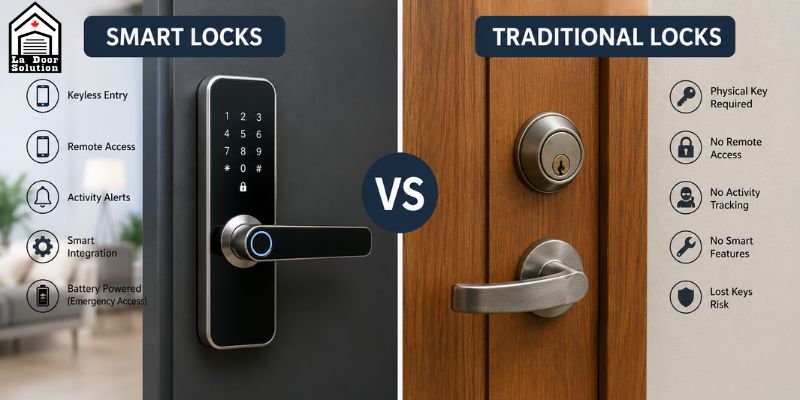
With a conventional key, access depends on possession of the physical key. With electronic access, permissions can potentially be assigned, changed, or removed without replacing the entire lock cylinder.
For growing businesses, this can simplify access administration.
However, access control should not be selected simply because it is modern. The system needs to match the building’s actual requirements.
A small office with five employees may have very different needs from a warehouse with several shifts and dozens of workers.
An office security upgrade is not necessarily a complete replacement of every lock and door.
Often, the most effective approach begins with an assessment of the existing setup.
A locksmith can examine areas such as:
The goal is to identify weaknesses and determine which improvements are actually necessary.
For example, an older office may still use conventional keys throughout the building. Instead of immediately installing electronic access everywhere, management might choose controlled electronic entry at the main entrance and continue using mechanical locks for low-risk internal rooms.
This type of phased office security upgrade can make more sense operationally and financially.
There is no single lock that can be called the best lock for business in every situation.
The correct choice depends on the door, traffic level, location, and security requirements.
Exterior commercial doors often experience frequent use. Hardware needs to withstand repeated operation while maintaining reliable security.
A locksmith may recommend commercial-grade cylindrical locks, mortise locks or other suitable hardware depending on the door configuration.
Businesses handling sensitive information, valuable equipment or controlled materials may require higher-security cylinders and restricted key systems.
These systems can help reduce unauthorised key duplication and improve key control.
Electronic locks can provide businesses with more flexible access management.
They may be appropriate for offices where staff access needs to be added or removed regularly.
Keypad systems can be useful where businesses want to avoid issuing physical keys to every authorised user.
However, PIN management becomes important. Shared codes can reduce accountability, so individual credentials may be preferable where access records are important.
Some commercial properties may benefit from connected access solutions that allow authorised administrators to manage credentials through software.
These systems can offer additional functionality, but businesses should also consider network reliability, system maintenance, cybersecurity and backup procedures.
One common mistake is choosing a lock based only on appearance or price.
The lock needs to work correctly with the door, frame, and surrounding hardware.
For example, a heavy commercial door may require hardware designed for that application. A high-traffic entrance can also place significantly more stress on a locking mechanism than an interior office door.
A professional assessment should consider:
This is particularly important when combining mechanical locks with electronic access systems.
Businesses tend to notice lock problems when they begin interfering with daily operations.
Some of the most common commercial lock problems include:
A key that becomes difficult to turn may indicate wear, misalignment, internal damage or another mechanical issue.
Repeatedly forcing the key can make the problem worse.
High-use keys can eventually bend, wear or break. If part of a key remains inside the cylinder, forcing another key into the lock can push the broken section deeper.
Professional extraction may be required before the lock can be used normally again.
Sometimes the lock itself is not the main problem.
If a commercial door has dropped or shifted, the latch and strike may no longer align correctly. This can make the lock appear faulty when the underlying problem is door alignment.
Frequently used cylinders eventually experience mechanical wear.
A worn cylinder can create inconsistent operation and may require repair, replacement, or rekeying.
This is one of the most important access-management concerns for businesses.
If a key cannot be accounted for, management needs to consider whether rekeying or another access change is appropriate.
Access control becomes particularly useful when a business needs more control over who can enter specific areas.
Consider an office with several departments.
Employees may need access to the main entrance, but only IT staff should enter the server room. Management may need access to financial records, while cleaning staff may require access only during specific hours.
A traditional key system can handle some of these requirements, but administration becomes more complicated as the organisation grows.
Electronic access can provide a more structured approach.
Businesses may consider access control when:
The decision should be based on actual operational requirements rather than simply following a technology trend.
A business locksmith in Edmonton can help identify practical improvements to a commercial property’s physical access system.
The process should start with understanding how the business operates.
For example, a locksmith may ask:
Who needs access to the building?
This establishes the number and type of users.
Which areas require restricted access?
This helps determine whether certain internal doors need additional controls.
What happens when an employee leaves?
The answer can influence whether traditional keys, restricted key systems, or electronic credentials are appropriate.
Are there existing access control systems?
Existing systems may be repairable, expandable or compatible with additional hardware.
Which doors experience the most traffic?
High-use entrances may require more durable hardware.
These questions make the security planning process more practical because the solution is based on how the business actually functions.
Not every security issue requires a new lock.
Office lock repair Edmonton can address problems such as worn cylinders, damaged hardware, sticking mechanisms, loose components, and other operational issues.
Repair can sometimes be preferable when the existing hardware is still suitable, and the problem is isolated.
However, replacement may make more sense when the hardware is heavily worn, repeatedly failing or no longer meets the business’s security requirements.
A useful approach is to consider the cost of continued repairs alongside the reliability and security of replacement hardware.
For example, repeatedly repairing a heavily worn entrance lock may provide only temporary relief. If the same problem continues, replacing the affected hardware may be a more practical long-term solution.
A useful assessment should look beyond the front entrance.
Walk through the property and consider every point where people enter, leave, or move between restricted areas.
Check the condition of locks, frames, hinges, closers, and strike plates.
Identify rooms containing sensitive information, equipment or valuable materials.
Review who currently has keys, cards, codes or other credentials.
Determine whether credentials belonging to previous employees remain active.
Consider how temporary workers receive and lose access.
Security hardware should not create unsafe exit conditions. Emergency and fire-safety requirements must be considered when changing door hardware or access-control systems.
Businesses should know who controls master keys and where spare keys are stored.
A locksmith can help turn these observations into a practical security improvement plan.
This can make access difficult to control. A structured key hierarchy or electronic credential system may provide better separation.
Employee turnover should trigger an access review.
Depending on the system, this may involve recovering keys, rekeying cylinders, or disabling electronic credentials.
Commercial entrances experience substantial use. Hardware selected solely on purchase price may not be appropriate for demanding applications.
A server room, public entrance, and storage closet do not necessarily require the same security level.
A lock cannot compensate for a damaged frame, poorly aligned door, or failing closer.
Electronic access control requires credential administration, user management, and maintenance.
A sophisticated system is only useful if the business can operate it properly.
A few practical habits can make commercial access management easier.
Maintain a current record of who has keys, cards, fobs, or codes.
Conduct periodic checks to ensure former employees and unnecessary users no longer have access.
Visitors should not automatically have access to employee-only areas.
Server rooms, records rooms, cash-handling areas and management offices may deserve additional controls.
If access control is likely to be installed later, consider compatibility before investing heavily in conventional hardware.
A sticking lock or loose door may seem minor, but ignoring mechanical issues can eventually result in lockouts or more expensive repairs.
Commercial locksmith services can be relevant to many types of businesses.
These include:
Each environment has different security requirements.
A retail store may prioritise customer flow and employee access, while a warehouse may focus more heavily on perimeter doors and restricted storage areas.
An office may need controlled access to confidential documents and technology infrastructure.
The important principle is to match the security solution to the actual risk.
Businesses can make a commercial locksmith assessment more productive by preparing a few details beforehand.
Document known problems and identify doors that frequently cause trouble.
It can also help to prepare information about:
This information gives the locksmith a clearer picture of the property’s requirements.
It can also prevent unnecessary hardware changes that may conflict with future security plans.
Business security is not simply about putting stronger locks on doors. It is about creating a controlled, practical, and maintainable system that reflects how the organisation actually operates.
A commercial locksmith in Edmonton can help businesses assess mechanical locks, office hardware, access points, and security weaknesses. For organisations with more complex access requirements, Commercial Access Control Systems Edmonton can provide additional control over employee and restricted-area access.
The most effective approach is usually a balanced one. Identify the genuine risks, understand how people use the building, repair suitable existing hardware, upgrade vulnerable areas and introduce access-control technology where it provides a clear operational benefit.
Whether the immediate issue involves business locksmith Edmonton support, office lock repair Edmonton, a new office security upgrade, or a broader access-control project, the starting point should always be the same: understand the building first, then choose security hardware that fits the way the business works.
A commercial locksmith Edmonton service can cover lock installation, repair, replacement, rekeying, master key systems, access control hardware, door hardware, and security assessments. The exact service depends on the property and the problem being addressed.
For example, a business experiencing a damaged office lock may need a repair rather than complete replacement. A company dealing with frequent employee turnover may benefit from a more structured access-management system.
Commercial Access Control Systems Edmonton can give businesses more structured control over who can enter specific doors. Depending on the system, credentials can include cards, fobs, PINs, or other authorised methods.
They can be particularly useful when different employees need different access levels. However, installation should also consider door hardware, emergency egress, credential management, system reliability and ongoing maintenance.
Replacement may be appropriate when a lock is severely worn, repeatedly failing, damaged beyond economical repair, or no longer provides the required level of security.
Repair may be more practical when the underlying hardware remains suitable, and the issue is limited to a replaceable or repairable component. A locksmith can assess the condition before recommending either option.
Electronic locks are not automatically better for every business. They provide advantages such as credential management and flexible access permissions, but they also introduce technology, maintenance, and administration requirements.
Traditional commercial locks can remain highly practical for certain applications. The right choice depends on the building, users, security requirements and operating environment.
There is no universal schedule that suits every organisation, but access should be reviewed whenever there is significant staff turnover, a lost key or credential, a security incident, a renovation, a change in building use, or a major organisational change.
Regular reviews can also identify worn hardware and access permissions that are no longer necessary.