
The garage door represents one of the biggest movable components within the house, but it remains the most overlooked part. The truth is that owners think about the garage door maintenance only when there is a problem, like the inability of the door to open in the morning rush hour, noise created by a damaged spring, or expensive emergency service calls.
It may seem to you that garage doors do not provide you with any information regarding their condition until the critical situation, but the fact is that the smaller problems like squeaky rollers, slower work, and unsteady movement are clear signs of more serious problems within the machinery.
Statistics prove that wear and absence of proper service are one of the major reasons why the garage door needs expensive repairs. According to industry statistics, torsion spring failure is the cause of 42% of garage door breakage, and the most common springs have a lifetime of seven to ten years of normal work. In addition, the failure rate rises dramatically during cold periods of the year when parts undergo a higher level of strain. Garage door maintenance tips can be learned from this blog.
The garage door of your house will be the biggest moving part in your residence, but it may be the least attended part as well. The common practice of homeowners is to think of garage door maintenance only after something breaks or malfunctions, like the inability of the door to move, the loud noise produced by broken springs, or an emergency repair call due to some other kind of malfunction.
Many people are unaware of the fact that garage doors give warnings long before their breaking down. Minor problems like squeaking rollers, slow movement, or imbalance in the movement can become bigger problems in the future if they are ignored now. Having knowledge about the maintenance checklist can also help car owners deal with door issues.
Garage door professionals frequently state that preventable wear and absence of regular servicing are the two most common reasons for expensive repair work. Statistics indicate that the failure due to fatigue of the torsion springs of the doors amounts to 42 percent of the garage door breakages, while the normal period of life for these springs is seven to ten years. Furthermore, the failure rate is higher in cold months.
One of the easiest but most useful tasks is to perform monthly visual checks of the entire garage door mechanism.
Specifically, look out for:
In most cases, homeowners do not discover these problems until their garage door stops working. Nevertheless, by identifying them early on, people can avoid bigger problems related to mechanics.
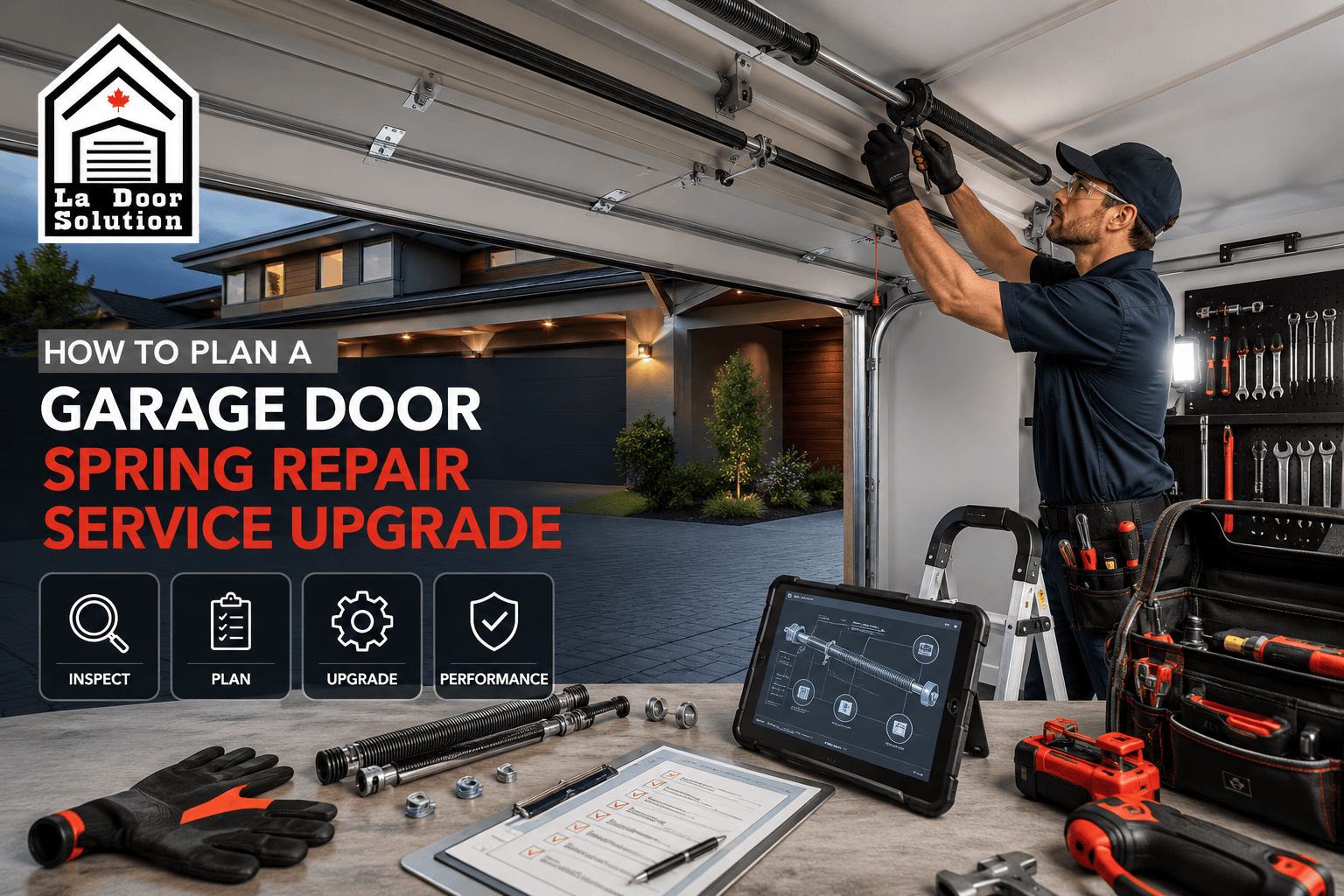
Special attention needs to be paid to torsion springs. In case you notice gaps between the coil spring sections or corrosion, seek professional help right away. The springs are subjected to a great deal of tension and therefore cannot be tampered with.
The best way to ensure the durability of your garage door is by applying lubricants to the mechanism.
Friction occurs between metal parts as they move, which leads to faster wear and puts extra strain on the opening system.
Lubricants should be applied to:
It is recommended to use silicon-based garage door lubricants or white lithium grease and avoid regular household lubricants. Lubrication decreases friction, makes noise quieter, and ensures the longevity of moving parts.
Many owners of garage doors wrongly think that lubrication should be applied to tracks. Actually, this process only draws dirt to the tracks. Tracks need to remain clean and dry, while moving parts require lubrication.
When the balance of your garage door is okay, the door should hold steady when half open.
Steps to test the balance include:
In case the door drops abruptly or rises on its own, it means that the springs may not have been balancing the door anymore. This is much more critical than most people think since the imbalance causes the opener to make up for the weight of the door. This leads to increased motor wear and tear. In case of an imbalance, arrange for professional help instead of adjusting the springs yourself.
Current generation garage doors employ safety features in the form of photo-eye sensors to avoid accidents and injuries. However, malfunctioning sensors are one of the main reasons why doors break down.
Indications that the sensors are out of order include:
Many times, the problem can be easily fixed. The sensors could have become misaligned as a result of bike riding, yard equipment, pets, and general use inside the garage. A slight collision will do. Clean your sensors regularly and check whether both sensors are facing each other properly.
A garage door opens and closes a number of times every day. Over the course of a year, that might amount to 1,500 operations. Over several years of use, vibration will loosen nuts, bolts, brackets and hinges. As part of the regular maintenance process, check any loose parts and tighten when needed.
Pay particular attention to:
The role of weather seals is more than just keeping rain out.
Weather seals do the following:
However, bottom seals are constantly exposed to sunlight, temperature changes, moisture, and salt on roads. It is common for garage door specialists to replace seals that have been destroyed due to water damage, and that homeowners were unaware of. In locations with a higher UV index, seals wear out faster. Check the condition of the bottom rubber and perimeter weather seals twice a year. Replace any worn-out parts before they start allowing moisture or pests to enter the garage.
Skilled technicians usually discover a problem with a garage door just by listening to how it works. You can do the same.
Pay attention to the following signs:
Usually, those sounds mean worn-out rollers, dried-up hinges, hardware, or springs. The recent industry experts say that noise is one of the first signs of an upcoming garage door breakdown. Do not ignore increased noise from your garage door.
Garage door tracks naturally collect:
While tracks generally do not require lubrication, they should remain clean. Use a dry cloth or soft brush to remove buildup. If necessary, clean with mild soap and water, then dry thoroughly. Clean tracks help rollers move smoothly and reduce unnecessary strain on the entire system.
Even diligent homeowners cannot safely inspect every component.
An annual professional inspection typically includes:
Professional technicians can often identify wear patterns that are not obvious to homeowners. Think of annual garage door servicing the same way you think about vehicle maintenance. A small investment in preventive care can help avoid significantly larger expenses later.
So, you now know how to prevent breakdown. Failure to detect a problem on your part may occur only when there is already damage done. However, you might find a lot of subtle signs from your garage door that will tell you that something needs fixing. This is the issue because a lot of people simply do not pay much attention to these signs until they encounter problems. If you know about some useful garage door maintenance tips, you can find door maintenance easy.
Just by taking a couple of minutes every month for your garage door to receive maintenance work, you will save a lot of money later when it comes to repairs. Also, this way, you will improve the safety of your garage door and increase its longevity. Garage door care can be assigned to LA Door Solution.
Garage door maintenance should be performed monthly, while lubrication and further inspection should take place twice a year. A yearly service appointment is also recommended.
The most common problems with garage doors include worn springs, misaligned sensors, squeaky rollers, hardware issues, and damaged weather sealings. All these can be avoided by regular maintenance.
Yes, you may lubricate your garage door independently with special lubrication of rollers, hinges, and springs. Don’t use grease on door tracks.
If your door feels too heavy to move, opens up incorrectly, makes sharp snapping sounds, or cannot stay balanced when lifted halfway by hand, chances are that your springs are worn out. It is best to check them with a professional.
A reversing garage door is often caused by misaligned safety sensors, obstructions in the track, or opener settings that need adjustment. Cleaning and realigning the sensors is a good first step.