

Choosing a new garage door is not simply about picking a colour or style that looks good from the street. Your garage door affects security, insulation, daily convenience, curb appeal, and the overall performance of your home. A poor choice can lead to premature wear, uncomfortable garage temperatures, excessive maintenance, and avoidable repair costs.
For Edmonton homeowners, climate is another important consideration. Cold winters, temperature fluctuations, snow, and moisture can place additional demands on garage door materials, seals, hardware, and openers.
If you are researching new garage door installation in Edmonton, the right approach is to consider the complete door system rather than treating the door as an isolated product. Size, insulation, construction, hardware, opener compatibility, and professional installation all influence the final result.
This guide explains what homeowners should evaluate before choosing a new garage door, how to compare different options, and what to expect from professional installation.
A garage door can be one of the largest moving components of a residential property. It opens and closes frequently, faces outdoor conditions, and often covers a substantial portion of the home’s front elevation.
The right door should therefore do more than look attractive.
It should:
An experienced installer looks at these factors together.
For example, a homeowner who uses the garage as a workshop may have different requirements from someone who primarily parks vehicles there. Likewise, an attached garage may benefit more from insulation than a detached garage that is rarely occupied.
Before contacting garage door installers in Edmonton, establish what you actually need from the door.
Consider these questions?
These questions make the selection process much easier.
Instead of asking only, “Which garage door looks best?” you can ask, “Which door construction and configuration make sense for this property?”
One of the most important parts of a successful garage door installation happens before the new door arrives.
The opening needs to be assessed accurately.
A professional installer may consider:
A door that appears to be the correct size may still require a specific track or hardware arrangement.
This is one reason homeowners should be cautious about ordering a door based only on measurements taken casually with a household tape measure.
Small measurement differences can affect installation requirements.
There is no single door that can accurately be called the best for every Edmonton home.
The best garage doors for homes depend on the property’s design, budget, climate exposure, and intended use.
Common options include:
Steel remains a popular choice because it can provide durability, relatively low maintenance, and a wide range of finishes.
Modern steel doors can also be manufactured with different insulation levels and panel constructions.
For homeowners wanting a practical combination of appearance and durability, a well-constructed steel door can be a strong option.
For an attached garage, insulation deserves particular attention.
Insulated garage doors Edmonton homeowners choose can help reduce heat transfer between the garage and the outside environment. This can be especially useful when the garage shares walls with heated areas of the home.
Insulation does not make a garage door completely airtight or turn an unheated garage into a living space. However, the door’s construction, panel insulation, perimeter seals, and bottom seal can all contribute to better thermal performance.
Contemporary designs may feature clean lines, large windows or modern panel arrangements.
These can work particularly well with newer architectural styles.
However, aesthetics should not replace functional considerations. A visually attractive door still needs appropriate insulation, hardware and structural support.
Traditional raised-panel designs remain practical for many residential properties.
They can complement a wide variety of house styles and are available in numerous colours and finishes.
The important point is to evaluate the construction and specifications rather than selecting a door solely by its appearance.
Edmonton’s winter conditions make thermal performance worth considering carefully.
A garage door with poor insulation can allow considerable heat transfer, particularly when the garage is attached directly to the house.
This matters even more if:
When comparing doors, look beyond the word “insulated.”
Ask about the door’s construction, insulation material, weather seals, and overall thermal specifications.
The door itself is only one part of the thermal envelope.
Gaps around the frame, worn seals, and an incorrectly fitted bottom seal can undermine an otherwise well-insulated panel.
Garage doors can have different construction levels.
A basic door may have a relatively simple panel construction, while more advanced models can incorporate insulation and multiple layers.
A multi-layer insulated door generally offers a more substantial construction and can provide better thermal performance and noise control than a basic uninsulated option.
However, the additional cost should be justified by your property’s needs.
If the garage is detached, unheated, and used only for vehicle storage, a premium insulated door may not provide the same practical value as it would for an attached garage with occupied space nearby.
Garage door weight is important because the entire operating system must be appropriately matched to it.
The springs counterbalance the door, while the opener provides controlled movement.
If the door is heavier than the existing system was designed for, simply keeping the old hardware may not be appropriate.
Professional garage door installers should assess whether the springs, tracks, rollers, cables, and opener are suitable for the replacement door.
This is particularly important during garage door replacement projects in Edmonton, where homeowners may assume that existing components can automatically be reused.
Sometimes they can.
Sometimes replacing ageing hardware at the same time is the more sensible option.
The decision should be based on the condition, specifications, and compatibility of the existing components.
Repairing an existing garage door can make sense when the main components are still structurally sound.
Replacement becomes more attractive when the existing system has several problems at once.
Consider replacement if the door has:
A single broken spring does not necessarily justify replacing an entire door.
On the other hand, repeatedly repairing an ageing door can become less economical when multiple components are approaching the end of their useful life.
A professional assessment can help distinguish between a sensible repair and a replacement that provides better long-term value.
The garage door and opener need to work as a system.
A new door can change the operating requirements, particularly if its weight or construction differs significantly from the previous door.
During installation, the technician should consider:
The opener should not be expected to compensate for a poorly balanced door.
If a new garage door is correctly installed and balanced, the opener should not have to struggle unnecessarily.
One of the most common questions homeowners ask is, how long do garage door installation projects usually take?
For a straightforward residential replacement, professional installation can often be completed within several hours, but the actual duration varies.
Factors include:
A simple replacement with compatible infrastructure may be relatively quick.
A more complicated installation can take longer.
Rather than choosing a contractor based solely on the shortest estimated installation time, homeowners should prioritise correct fitting, adjustment and safety testing.
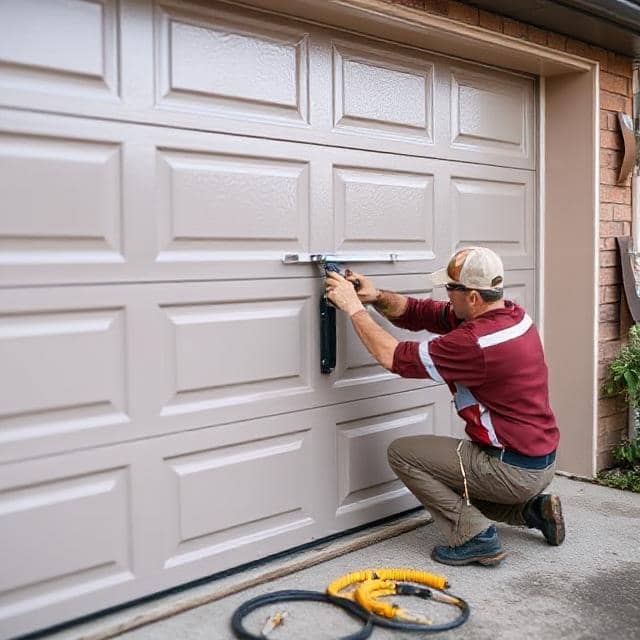
A quality installation generally involves more than attaching panels to tracks.
The process may include:
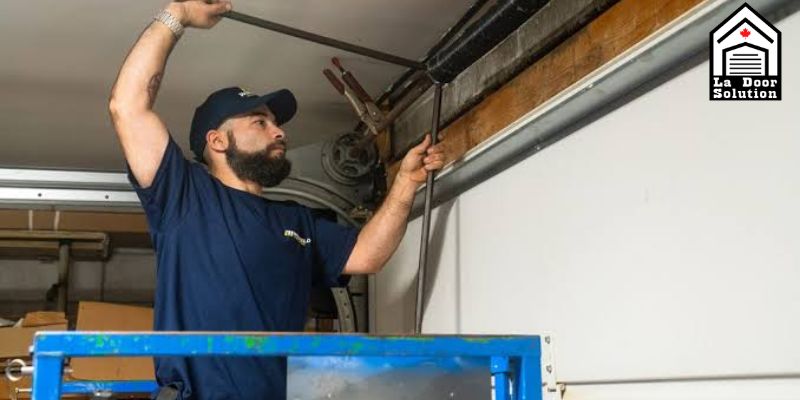
The old door and associated hardware need to be removed safely.
If the existing system uses tensioned springs, this stage requires appropriate knowledge and equipment.
The installer checks the frame, mounting points and surrounding structure.
Problems with the opening should be identified before the new door is fully installed.
Tracks, rollers, hinges, brackets, springs and cables must be positioned accurately.
Small alignment errors can create noticeable operating problems later.
The panels are assembled according to the manufacturer’s configuration.
Each section needs to move correctly within the track system.
The counterbalance system is adjusted so the door can operate appropriately.
This is a critical part of the installation.
The installer should verify travel, operation and safety functions.
The door should not simply open and close once and be considered finished.
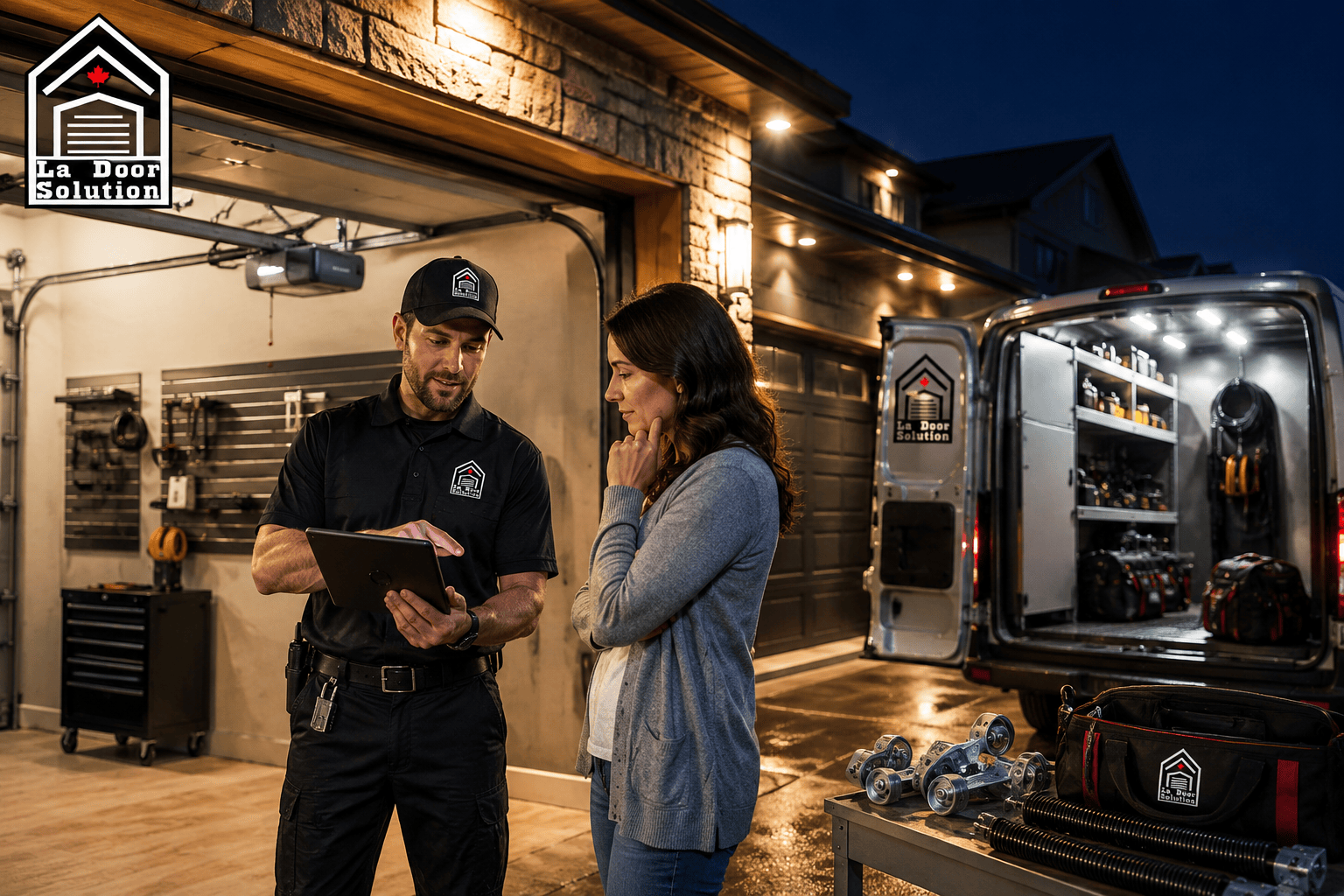
Choosing the right installer is as important as choosing the door.
When comparing garage door installers in Edmonton, look for evidence of:
Do not be afraid to ask why a particular door, spring system or opener is being recommended.
A knowledgeable professional should be able to explain the reasoning without relying on confusing technical language.
The cheapest quote may not represent the lowest overall cost.
A low-priced installation can become expensive if poor alignment, unsuitable hardware, or inadequate adjustment leads to premature problems.
Compare what is actually included.
Appearance is important, but an attached garage may benefit significantly from better insulation.
Consider the relationship between the garage and the rest of the house before choosing a basic door.
Existing tracks or openers may appear functional, but age and compatibility matter.
Reusing components should be an informed decision rather than an assumption.
The door itself cannot compensate for a damaged or poorly prepared opening.
The surrounding structure should be assessed before installation begins.
Garage doors contain heavy panels, high-tension springs and moving mechanical components.
Incorrect installation can create safety hazards and cause premature equipment failure.
For complex spring and counterbalance work, professional installation is the safer approach.
If your garage is attached, the door can influence comfort, noise and thermal performance in adjacent areas.
Do not assess the door only from the driveway.
A properly balanced door is fundamental to reliable operation.
If a new door is difficult to lift, unusually noisy or placing excessive demand on the opener immediately after installation, something should be investigated.
The door panel may be highly insulated, but damaged perimeter seals can still allow air and moisture infiltration.
Inspect the bottom seal and side and top weatherstripping periodically.
Ask how frequently moving components should be inspected and what maintenance the manufacturer recommends.
Routine attention to rollers, hinges, tracks, and other appropriate components can help identify developing problems.
Modern garage door systems incorporate safety mechanisms designed to reduce injury and property damage.
Never bypass or disable these features simply because they appear inconvenient.
If a safety feature is malfunctioning, have it assessed.
Before committing to a particular door, ask:
The answers can reveal whether you are comparing genuinely equivalent options.
Before choosing your new door, work through this checklist:
Property
Performance
Construction
Hardware
Installation
Long-term ownership
This approach helps turn a complicated purchase into a series of manageable decisions.
Choosing a new garage door should be based on more than appearance or the lowest installation quote.
For Edmonton homeowners, the right solution needs to account for climate, insulation, door weight, usage, hardware compatibility, and professional installation quality.
If you are considering new garage door installation in Edmonton, start by evaluating how your garage is actually used. An attached garage beside living space may benefit from a well-insulated door, while a detached storage garage may have different priorities.
Likewise, garage door replacement in Edmonton does not always mean replacing every existing component. A professional assessment can determine which parts are suitable for reuse and which should be upgraded for compatibility and reliability.
Most importantly, choose a door and installation approach that make sense for the entire system. A properly fitted door, correctly balanced springs, suitable tracks, compatible opener, and functional safety features all contribute to dependable everyday operation.
The best garage door is ultimately the one that fits your property, your climate, your usage, and your long-term expectations rather than simply the one that looks best in a catalogue.
There is no universal best option because every property has different requirements. For many attached homes, an insulated steel garage door can offer a practical combination of durability, thermal performance and relatively low maintenance.
However, the ideal choice depends on garage use, insulation needs, architectural style, budget, and opener compatibility. A professional assessment can help determine the appropriate construction and hardware.
A straightforward residential replacement can often be completed within several hours, although the exact duration varies. Door size, hardware configuration, opener replacement, structural issues, and site conditions can all affect the installation time.
A responsible installer should prioritise correct assembly, balancing and safety testing rather than rushing to finish.
Sometimes, but compatibility needs to be checked. The new door’s weight, dimensions, and operating characteristics must be appropriate for the existing opener.
An installer should also check the opener’s condition, mounting arrangement, and safety functions. If the opener is old or incompatible, replacing it during the door installation may be more practical than trying to adapt it.
It can be particularly worthwhile for attached garages or garages located beside occupied rooms. Insulation can reduce heat transfer and may improve comfort in spaces adjacent to the garage.
The overall result also depends on weatherstripping, the garage walls and ceiling, windows, and other parts of the building envelope. An insulated door is helpful, but it is not a substitute for proper overall insulation.
The answer depends on the condition and age of the complete system. A door with one worn component may be an excellent candidate for repair.
Replacement can make more sense when the door has several ageing components, structural deterioration, repeated failures, poor insulation, or compatibility problems with modern equipment.
A professional inspection can help you compare the likely cost and reliability of continued repairs against a complete replacement.