

Home security has changed considerably in recent years. A strong deadbolt is still useful, but many Edmonton homeowners are now looking at keyless entry, keypad locks, smartphone access, and connected security systems to make everyday life easier.
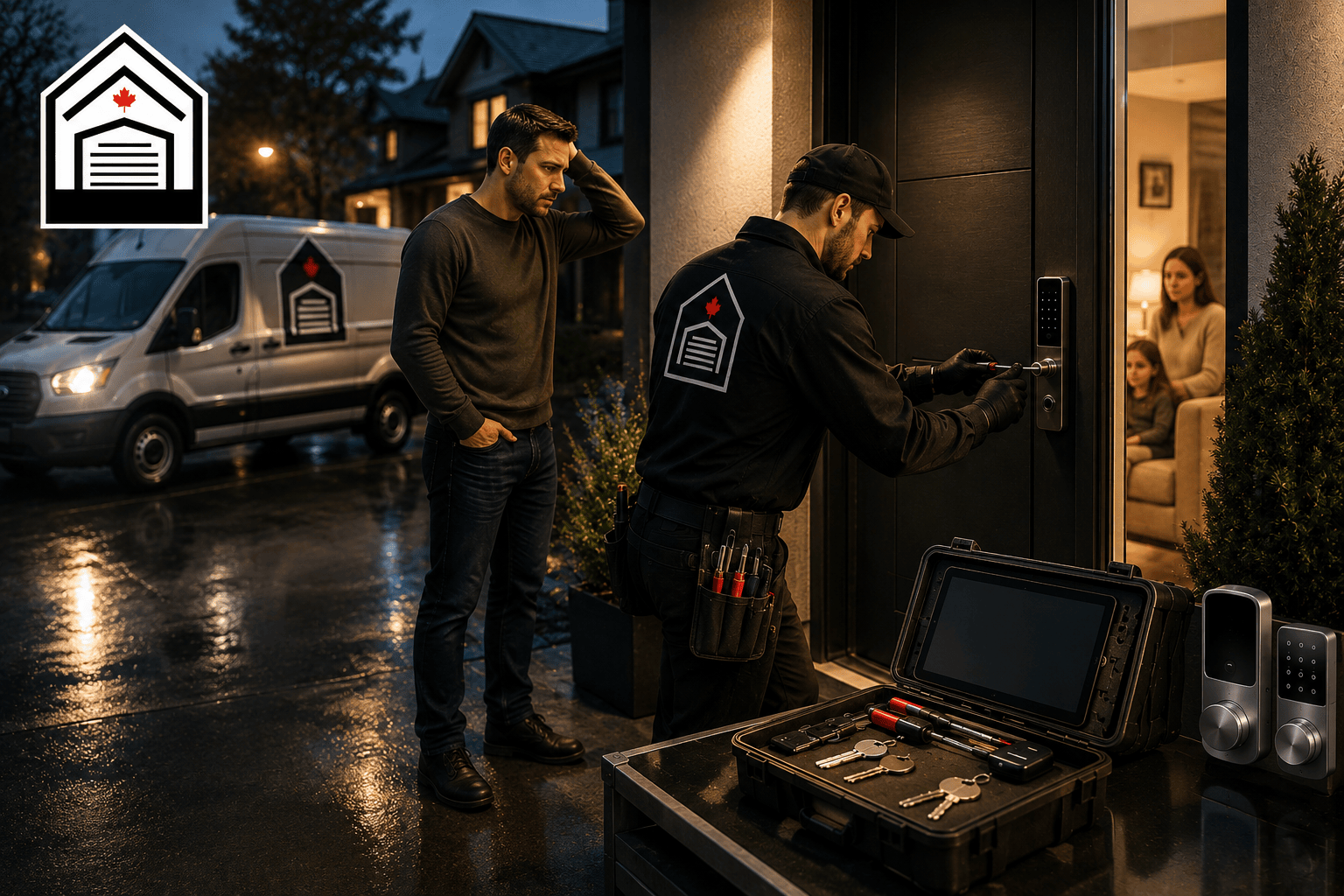
For homeowners comparing these options, a residential locksmith in Edmonton can provide more than emergency entry. A locksmith can assess the condition of existing locks, check whether a smart lock will work with the current door, identify weaknesses in the hardware, and help select an appropriate locking system.
The right smart lock can be convenient, but it should not be chosen simply because it has an app or modern appearance. Edmonton homes deal with cold winters, temperature changes, busy households, and, in some cases, older doors and frames. These factors can affect how a lock performs.
So, what should homeowners know before upgrading?
This guide explains how smart locks work, what to look for, when traditional locks may still be appropriate, and how professional installation can help you avoid common security and compatibility problems.
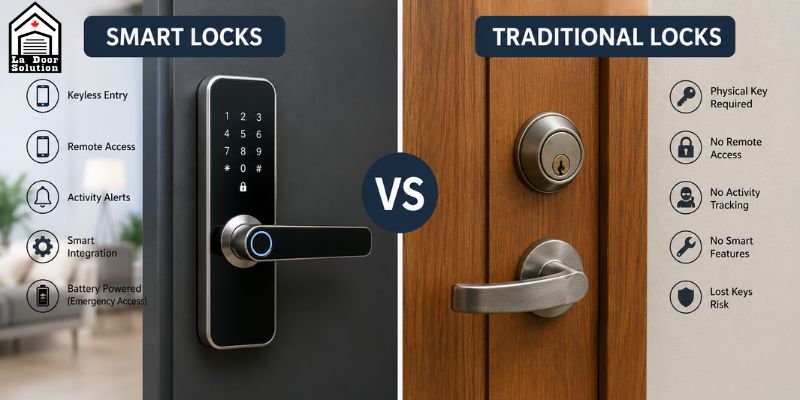
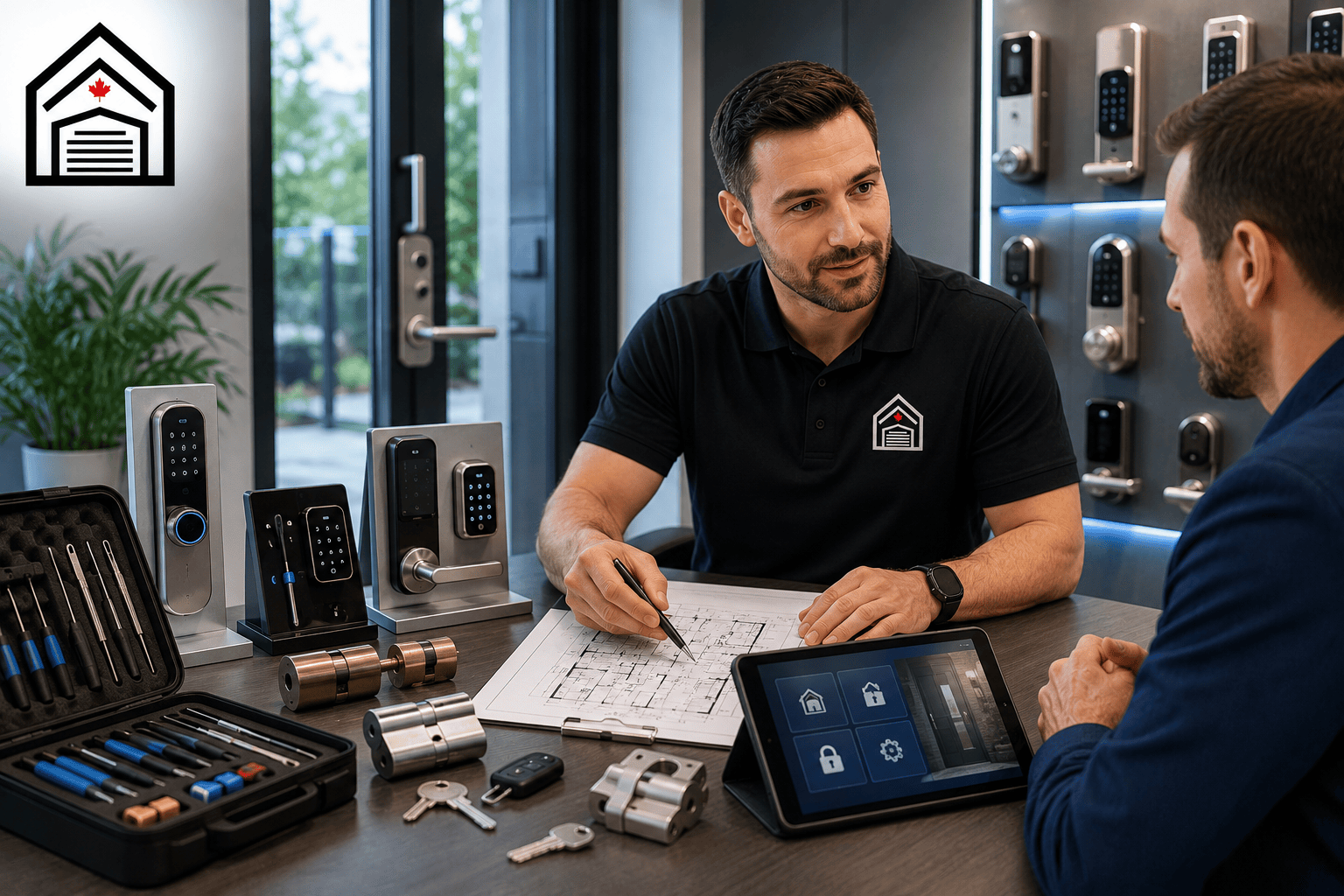
Smart home security locks Edmonton homeowners choose typically replace or supplement a traditional keyed locking mechanism with electronic access.
Depending on the model, a smart lock may allow entry through:
Some systems also allow homeowners to create temporary access codes for family members, cleaners, tradespeople or guests.
The important point is that smart locks are not all designed in the same way. Some operate entirely through Bluetooth, while others connect to a home network or broader smart-home platform.
A homeowner who wants simple keyless entry may not need the same system as someone who wants remote access, activity notifications and integration with cameras or an alarm system.
A smart lock needs to work correctly with the door, frame and existing hardware.
Before purchasing one, check:
A smart lock installed on a poorly aligned door can become unreliable regardless of how advanced the electronics are.
This is one reason professional assessment can be useful before buying equipment.
A home locksmith can look at the complete entry system rather than focusing only on the lock itself.
For example, imagine a homeowner whose front door becomes difficult to lock during winter. They may assume the old deadbolt needs replacing. However, the actual problem could be movement in the door, a misaligned strike plate or pressure on the latch.
Installing an electronic lock without correcting that underlying problem could simply transfer the same issue to a more complicated locking mechanism.
A locksmith can inspect:
This assessment helps determine whether the property needs a smart lock, conventional lock change, repair or a combination of security improvements.
There is no single product that is automatically the best locks for home use. The appropriate choice depends on the property, occupants and desired access method.
Instead of choosing based purely on appearance, consider the following factors.
The electronic portion of a smart lock does not eliminate the importance of the mechanical locking mechanism.
A properly engineered deadbolt or latch should operate smoothly and securely.
If the mechanical side is weak, adding electronic controls does not automatically make the entire door more secure.
What happens if the battery runs out?
A smart lock should have a practical backup method. Depending on the model, this could involve a physical key, external emergency power connection or another manufacturer-supported method.
Before installation, understand exactly how emergency access works.
Battery performance can vary depending on the lock, usage and environmental conditions.
Edmonton’s winter temperatures are particularly relevant when a lock is exposed to outdoor conditions. Homeowners should follow the manufacturer’s battery recommendations and avoid assuming that a battery will last for a fixed period under every circumstance.
If several people use the home, individual access codes can be useful.
For example:
This can be more practical than making multiple physical copies of a key.
A smart lock should still be evaluated as physical security hardware.
Look at the quality of:
The strongest electronic features cannot compensate for a weak door or poorly secured frame.
Not every locking problem requires new hardware.
A door lock repair may be appropriate when the lock is fundamentally sound but has developed a serviceable problem.
Common examples include:
For example, if a deadbolt works perfectly when the door is open but becomes difficult to turn when the door is closed, the problem may be alignment rather than the lock itself.
Replacing the entire system without diagnosing the cause could add unnecessary expense.
A professional inspection can help distinguish between a repairable issue and hardware that has reached the end of its useful life.
A lock change makes more sense when the existing hardware is damaged, outdated, incompatible with the homeowner’s requirements, or no longer providing the desired level of control.
A replacement may be worth considering after:
There is also an important difference between replacing a lock and rekeying it.
With rekeying, the existing lock hardware may remain in place while the internal configuration is changed so that previous keys no longer operate it.
Replacement, on the other hand, involves installing new hardware.
Which option makes sense depends on the condition of the existing lock and the homeowner’s security requirements.
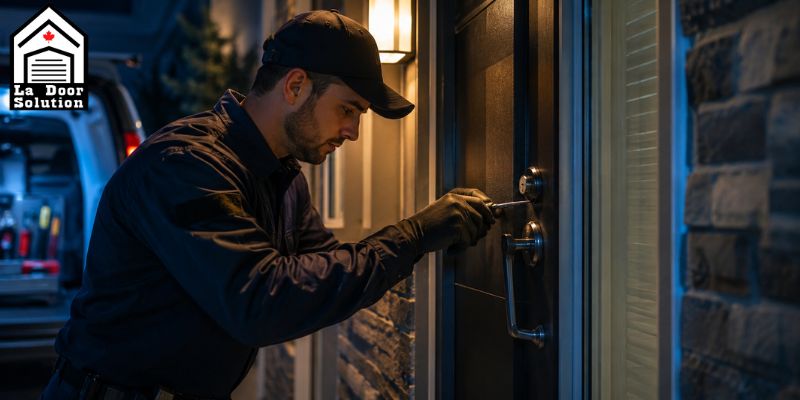
Being locked out of your house can make people act quickly and sometimes make the situation worse.
A common mistake is trying to force the door open with improvised tools. This can damage the door, frame, weather sealing, or locking mechanism.
A safer approach is to first check whether another legitimate entrance is available.
If there is no safe alternative, contacting a qualified locksmith can provide a controlled solution.
A house lockout service Edmonton professional can assess the type of lock and determine an appropriate entry method. The objective should be to regain access while avoiding unnecessary damage.
Ask yourself:
If there is an immediate safety emergency, contact the appropriate emergency service rather than relying solely on locksmith assistance.
Smart technology can improve home security when it is combined with good physical hardware and sensible access management.
One useful feature is the ability to manage who can enter.
Traditional keys can be copied or misplaced. A smart system may allow access credentials to be changed without replacing the entire lock.
Some systems also provide notifications when the door is locked or unlocked. Depending on the product, homeowners may be able to check the lock remotely.
However, connected technology introduces another consideration: account and device security.
Homeowners should:
Smart security is not just about the lock. It includes the account, phone, network and physical door.
For a busy household, convenience can be one of the biggest advantages.
Consider a family where both parents work, children arrive home at different times and a cleaner visits once a week.
Instead of distributing several keys, the household could use individual access codes or authorised digital credentials, depending on the system.
This can make access easier to manage.
Another practical scenario involves a homeowner returning from shopping with both hands full. Keyless entry can eliminate the need to search through a bag for a physical key.
However, convenience should never replace basic security practices.
Climate is an important consideration for exterior door hardware.
Edmonton experiences very cold winter conditions, and outdoor-facing electronic components can be exposed to temperature fluctuations.
Before choosing a smart lock, check the manufacturer’s specified operating temperature and installation requirements.
Homeowners should also pay attention to:
A lock that works perfectly during mild weather can behave differently if the door becomes difficult to move or hardware is exposed to extreme conditions.
The solution is not necessarily to avoid smart locks. It is to choose hardware appropriate for the installation environment.
Even a good product can perform poorly if installed incorrectly.
If the existing mechanism is worn or damaged, placing a smart component over it does not necessarily solve the underlying issue.
A deadbolt should move smoothly without excessive force.
If the lock requires pushing, pulling or lifting the door every time, investigate the alignment before installing electronic hardware.
More features do not automatically mean a better solution.
Someone who only needs keypad entry may not need an expensive connected system with multiple integrations.
Every household should know what happens if the batteries fail, the phone is unavailable or the electronic system experiences a fault.
When a family member moves out or a service provider no longer needs access, their credentials should be removed promptly.
Not always.
Some homeowners prefer a fully keyless system, while others feel more comfortable keeping a physical key as a backup.
The choice depends on the product and household.
For older residents, rental properties or homes with several occupants, a conventional key system may sometimes be simpler.
For tech-oriented households, keypad or app-based entry may provide useful convenience.
A locksmith can help compare the practical options rather than assuming one type of lock suits every property.
Before approving an installation, ask clear questions.
The answer should account for the door, frame, deadbolt and available mounting space.
If the current lock or frame has a problem, fixing it first may produce a more reliable installation.
You should know the manufacturer’s recommended emergency access procedure.
This matters if different people will use the property at different times.
Ask how the system can be opened if electronic access becomes unavailable.
These questions are practical because they focus on what happens after installation, not just how the lock looks on day one.
A front-door smart lock is only one part of residential security.
Look at other access points, including:
Check whether each exterior door has suitable hardware and whether the frame and strike area are secure.
Lighting, visibility, door condition and sensible access management can also contribute to a more complete security approach.
From a practical perspective, the most useful approach is to solve the actual security problem rather than simply replacing hardware.
Tip 1: Start with the door.
A strong lock on a poorly aligned or damaged door is not an ideal setup.
Tip 2: Think about daily use.
Consider who enters the property, when they enter and how access should be managed.
Tip 3: Keep an emergency plan.
Know how the lock behaves during battery failure or electronic malfunction.
Tip 4: Review access regularly.
Remove unused codes and digital credentials.
Tip 5: Do not ignore small warning signs.
A key that increasingly sticks, a deadbolt that drags or a latch that needs repeated adjustment can indicate a developing problem.
Tip 6: Match technology to the property.
A simple keypad may be more practical than a highly connected system if the household does not need remote functionality.
Choosing a modern locking system should begin with the needs of the household, not the features printed on a product box.
For Edmonton homeowners, smart home security lock solutions can offer convenient keyless access, flexible user management, and useful technology. But the fundamentals still matter. A properly aligned door, quality mechanical hardware, secure credentials, and a sensible emergency-access plan are just as important as smartphone control.
Whether you need a home locksmith Edmonton professional for an existing lock problem, a new smart lock installation or advice after being locked out, start by identifying the actual problem. A careful assessment can help determine whether repair, rekeying, replacement or a smart upgrade is the most practical route.
The goal is straightforward: reliable access when you need it, controlled access when you do not, and a locking system that works properly every day.
A residential locksmith can assist with lock installation, repairs, rekeying, lock replacement, access management and security assessments. They may also help homeowners determine whether existing door hardware is compatible with a smart locking system.
A properly selected and installed smart lock can provide useful access-control features, but security depends on the complete system. Physical lock quality, door and frame condition, account security, software updates and access management all matter.
Some smart locks are designed to work with particular existing deadbolt configurations, while others require replacement of the existing hardware. Compatibility should be checked using the exact door and lock measurements rather than assuming that every deadbolt will work.
First check whether there is another authorised and safe entrance. Avoid forcing the door or using improvised tools because this can cause unnecessary damage. If no safe option is available, a professional locksmith can assess the lock and determine an appropriate entry method.
Not necessarily. Depending on the lock, rekeying may allow the existing hardware to remain while preventing the old key from operating it. Replacement may be appropriate if the hardware is worn, damaged or if you want to upgrade to a different access system.